
Wine Tasting for Beginners: Look, Smell, Taste in 3 Steps
Wine Tasting for Beginners: Look, Smell, Taste in 3 Steps
Wine tasting is not as intimidating as it sounds. At its core, it is simply using your three senses — sight, smell, and taste — to understand what is in your glass. This guide walks through the basic Look, Smell, Taste method, with Spanish wine examples from the Casavinoteca catalog that are ideal for practicing at home.
What Is Wine Tasting
Wine tasting is the process of using your senses to observe and remember the characteristics of a wine. It is not just drinking — it is paying deliberate attention to color, aroma, and flavor to understand what grape the wine is made from, where it comes from, and what style it represents.
Wine tasting breaks down into three main steps, often summarized as “Look, Smell, Taste.” The three steps work together: the first tells you about age and weight, the second reveals aroma and identity, and the last confirms flavor and structure.
Before you start, prepare a few things:
- A tulip-shaped wine glass with a slightly narrow rim to concentrate aromas
- Good lighting, with a white surface beneath the glass to judge color clearly
- Proper serving temperature — reds around 16–18°C, whites around 8–12°C
Step 1 — Look (Visual)
The first step is looking at the wine in your glass. Pour about one-third full, then tilt the glass slightly over a white surface and observe the following.
Color: Color reveals age and type. Young reds are deep ruby to purple. As reds age, the color lightens toward brick orange or tawny. Young whites are pale yellow; as they age, they deepen to gold or amber.
Clarity: A good wine should be clear, not cloudy. Cloudiness can signal a storage or production issue.
Body: Watch how the wine clings to the glass. When you swirl gently, a full-bodied wine flows slowly and leaves thick “legs” on the glass, while a lighter wine flows quickly and leaves thin legs.
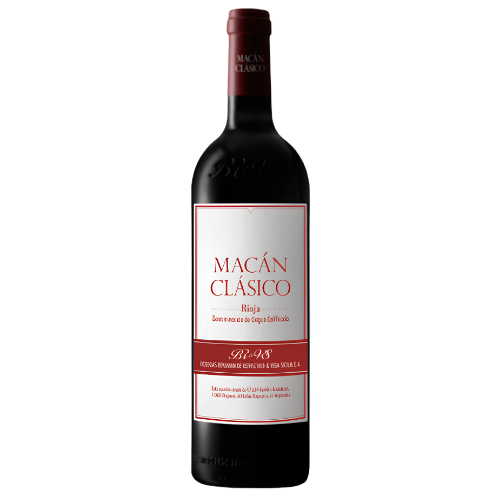
A wine well-suited for practicing color observation is Vega Sicilia Macan Classico 2019, a Rioja red with a bright, deep ruby color that shows the freshness of a younger wine.
Step 2 — Smell (Aroma/Nose)
The second step is smelling the wine. After swirling the glass gently to introduce air, bring the glass to your nose and inhale slowly and deeply. Smelling is the most important step because the human nose can distinguish thousands of aromas.
Wine aromas fall into three main groups:
- Primary aromas: From the grape itself — fruit, flowers, herbs, minerals. These tell you the grape variety and region
- Secondary aromas: From fermentation — bread, yeast, butter. Often found in wines that underwent barrel fermentation
- Tertiary aromas: From aging and oak — toasted oak, spice, coffee, cocoa, leather. These develop over time in bottle and barrel
If you do not smell much on the first try, swirl more vigorously and try again. Sometimes aromas emerge only after the wine has had a moment to breathe.
A wine ideal for practicing aroma is Oremus Mandolas Furmint 2021, a white wine with clear fruit and floral aromas that are easy to identify as primary scents.
Step 3 — Taste (Palate)
The final step is tasting. Take a small sip, but do not swallow immediately. Let the wine spread across your palate so you can sense flavor in every area.
What to observe at this stage:
- Attack: The first impression — acidity, sweetness, or astringency that hits immediately
- Mid palate: The flavors that develop as the wine sits in your mouth — fruit, spice, concentration
- Structure: Tannins (the drying sensation in reds), acidity (the freshness), and body (the weight and fullness)
- Finish: The lingering taste after you swallow. Good wines leave a long, persistent finish
A wine ideal for practicing structure is Vega Sicilia Pintia 2020, a Toro red with firm tannins and full body — perfect for sensing concentration and structure.
Spanish Wines Ideal for Tasting Practice
For beginners who want to practice wine tasting at home, start with wines that have clear, distinct characteristics so your senses can learn easily.
- White wine for aroma practice: Oremus Mandolas Furmint 2021 — clear fruit and floral aromas make it ideal for the Smell step
- Lighter red for palate practice: Vega Sicilia Macan Classico 2019 — soft tannins and freshness make it approachable for the Taste step without overwhelming astringency
- Bold red for structure practice: Vega Sicilia Pintia 2020 — firm tannins and full body are perfect for sensing concentration and weight
To explore more reds for tasting practice, browse our red wine category.
Frequently Asked Questions
Do I need a special glass?
You do not need an expensive glass, but a tulip-shaped glass with a narrow rim helps concentrate aromas. A clear, unpatterned glass lets you see the wine’s color accurately.
What temperature is best for wine tasting?
Reds around 16–18°C, whites around 8–12°C. If a wine is too warm, alcohol aromas dominate. If too cold, aromas are muted.
What if I cannot smell anything?
Try swirling more vigorously to introduce air, then smell again. Aromas often emerge after the wine has breathed for a moment. Regular practice also trains your nose to recognize scents more easily.
Should I taste from light to heavy wines?
Yes. Taste whites before reds, and lighter wines before bolder ones, so the flavor of a heavy wine does not overpower a lighter one.
Casavinoteca curates Spanish wines from leading estates, with delivery across Thailand. Members can view pricing and place orders after KYC verification.
