Galician Razor Clams: Origin, Serving, and Conservas
Galician Razor Clams: Origin, Serving, and Conservas
Galician razor clams are one of the most interesting premium conservas from Spain. Canned razor clams from Galicia are a seafood with a distinctive shape and a bold flavor. This guide explains their origin, scientific name, harvesting and conservas production methods, and how to serve them, with information from the Casavinoteca catalog.
What Are Galician Razor Clams
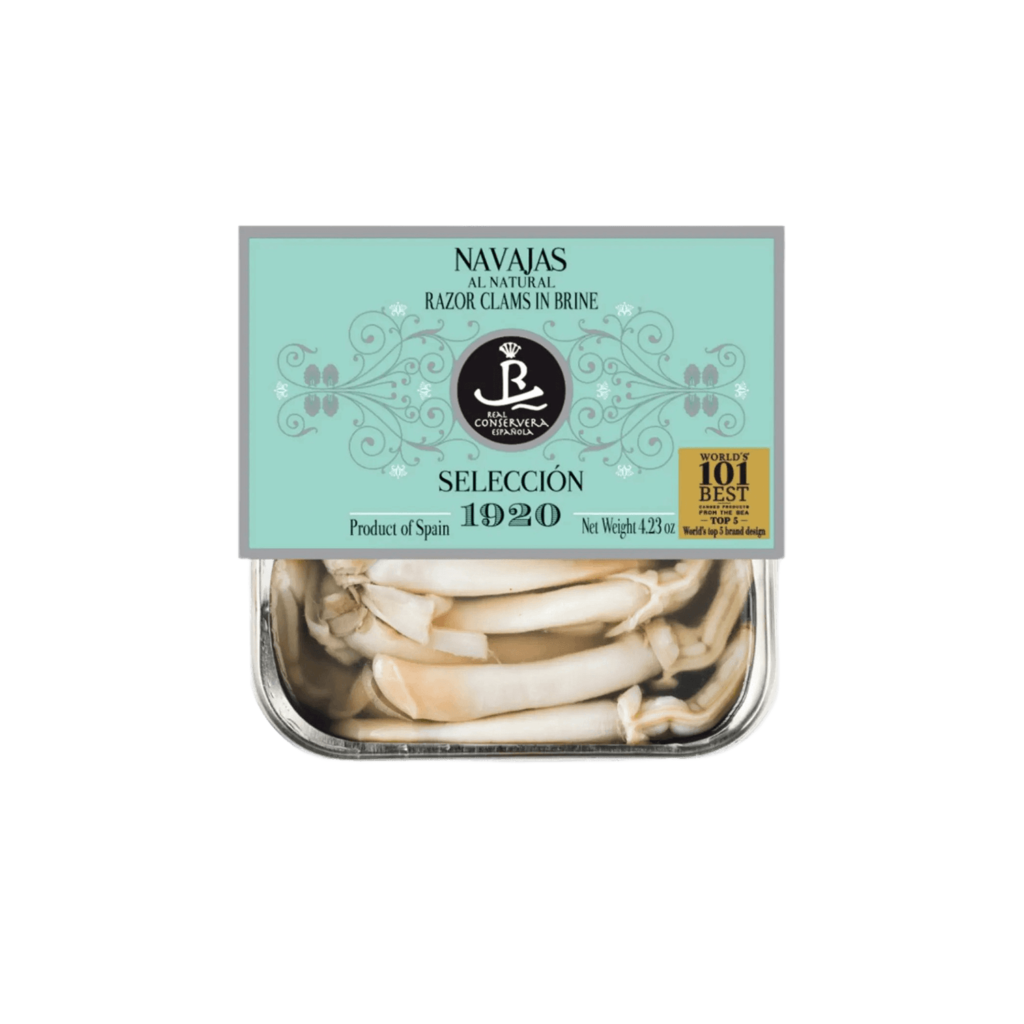
Galician razor clams are conservas made from razor clams harvested in the waters of Galicia, a region in northwestern Spain. Razor clams are bivalve mollusks with a long, narrow shell shaped like a straight razor — which is the origin of the English name “razor clam.” In Spanish, they are called “navaja.”
Razor clams in Galicia live in the sandy seabeds along the coast. They burrow deep into the sand and expose only the parts used for breathing and feeding. Harvesting razor clams requires skill, because the clams burrow deep and move quickly when disturbed.
What makes Galician razor clams special is the quality of the clams and the conservas production process. Razor clams from Galicia have firm meat and a distinctive flavor, making them a valued seafood popular in premium conservas.
Scientific Name and Species
The razor clam used in Galician conservas has the scientific name Solen marginatus, a bivalve in the family Solenidae found in the Atlantic, particularly along the coasts of Spain and Portugal.
Solen marginatus is characterized by a long, razor-shaped shell that is white to pale yellow. The meat is creamy white, firm, and has a mild briny flavor. This species is favored for conservas because its firm meat holds its shape well through the production process.
Using the correct scientific name matters because there are several razor clam species in different waters. Identifying Solen marginatus confirms that the clam comes from the correct origin and has the quality that Galicia is known for.
Harvesting and Conservas Production
Harvesting razor clams in Galicia is a process that requires skill and care.
Harvesting: Galician fishermen harvest razor clams by digging in the sandy seabeds along the coast at low tide. The clams burrow deep and move quickly, so harvesting must be fast and precise. Sometimes salt is used to coax the clams out of the sand.
Conservas production: The harvested razor clams go through an artisanal conservas production process:
- Selection: Only clams of the right size and quality are selected
- Cleaning: Clams are cleaned, washed of sand and impurities
- Steaming or boiling: Clams are steamed or boiled to cook them, with time and temperature controlled to preserve texture
- Packing into tins: The cooked clams are placed into tins by hand, carefully arranged
- Adding oil or sauce: Extra virgin olive oil or sauce is added according to the recipe
- Sealing and sterilizing: Tins are sealed and undergo heat sterilization
The result is razor clam conservas with firm meat, a distinctive flavor, and a shelf life of several years at room temperature.
Razor Clams in the Casavinoteca Catalog
Casavinoteca curates razor clam conservas from artisanal factories in Galicia. The razor clams we select are harvested along the coast of Galicia, produced using traditional methods, and packed in extra virgin olive oil.
For Galician razor clams in our catalog, see Galician Razor Clams, and for all conservas, browse our conservas category.
For background on conservas, see What Is Conservas?, and for Galician sardines, see Galician Sardines.
How to Serve Razor Clam Conservas
Razor clam conservas can be served in several ways.
On its own: Open the tin and eat it directly. Place on a small plate with crusty bread. This method lets you experience the full flavor of the razor clams and olive oil.
As tapas: Place razor clams on crostini, top with minced garlic, parsley, or fresh herbs, and serve as tapas.
In pasta: Razor clam conservas can be added to pasta for seafood flavor. The olive oil in the tin can be used as part of the sauce.
Paired with wine: Razor clam conservas pairs well with high-acid white wines. The acidity complements the mild briny flavor of the clams.
Frequently Asked Questions
How are Galician razor clams different from ordinary razor clams?
Galician razor clams (Solen marginatus) are harvested along the coast of Galicia, where the sea conditions are favorable. They are produced using traditional methods and packed in extra virgin olive oil. Ordinary razor clams may come from other origins and be produced industrially.
What is the scientific name?
The razor clam used in Galician conservas has the scientific name Solen marginatus, a bivalve in the family Solenidae found in the Atlantic Ocean.
What should I eat with razor clam conservas?
Razor clam conservas can be eaten on its own with crusty bread, served as tapas, added to pasta, or paired with high-acid white wine. The olive oil in the tin can also be used as part of a sauce.
How long can razor clam conservas be stored?
Properly sterilized razor clam conservas can be stored at room temperature for several years. Store in a cool, dry place away from direct sunlight.
Casavinoteca curates razor clam conservas from artisanal factories in Galicia, with delivery across Thailand. Members can view pricing and place orders after KYC verification.